Concert Programs
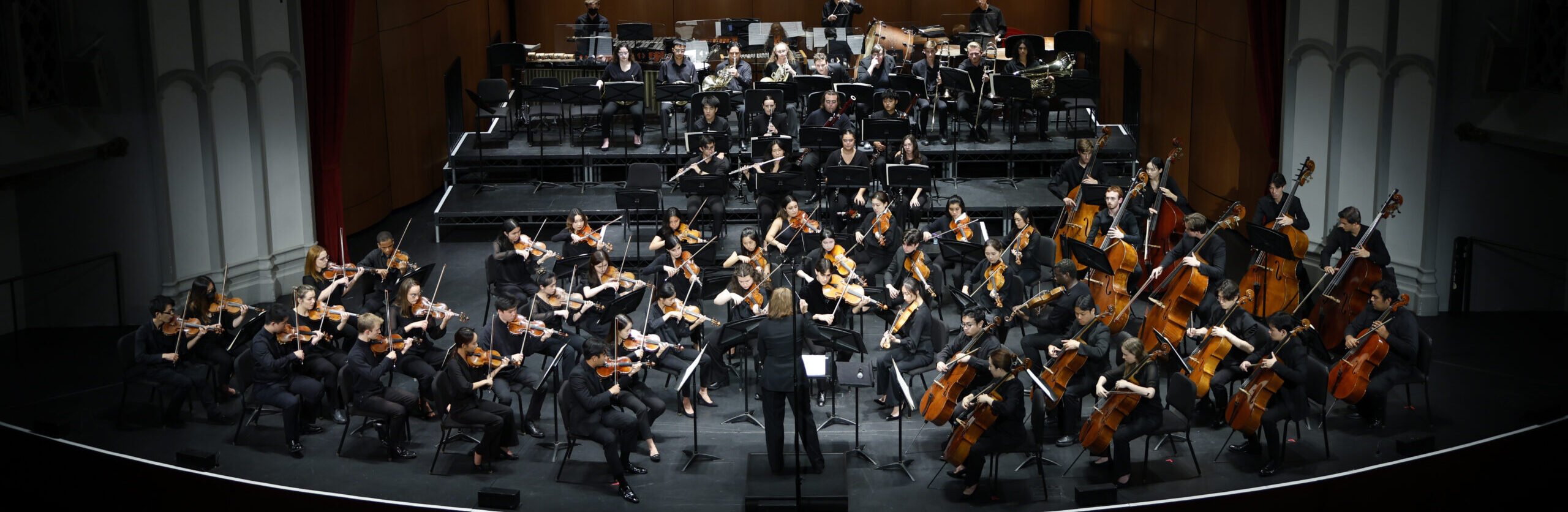
USC Thornton Chamber Orchestra
USC Thornton Chamber Orchestra
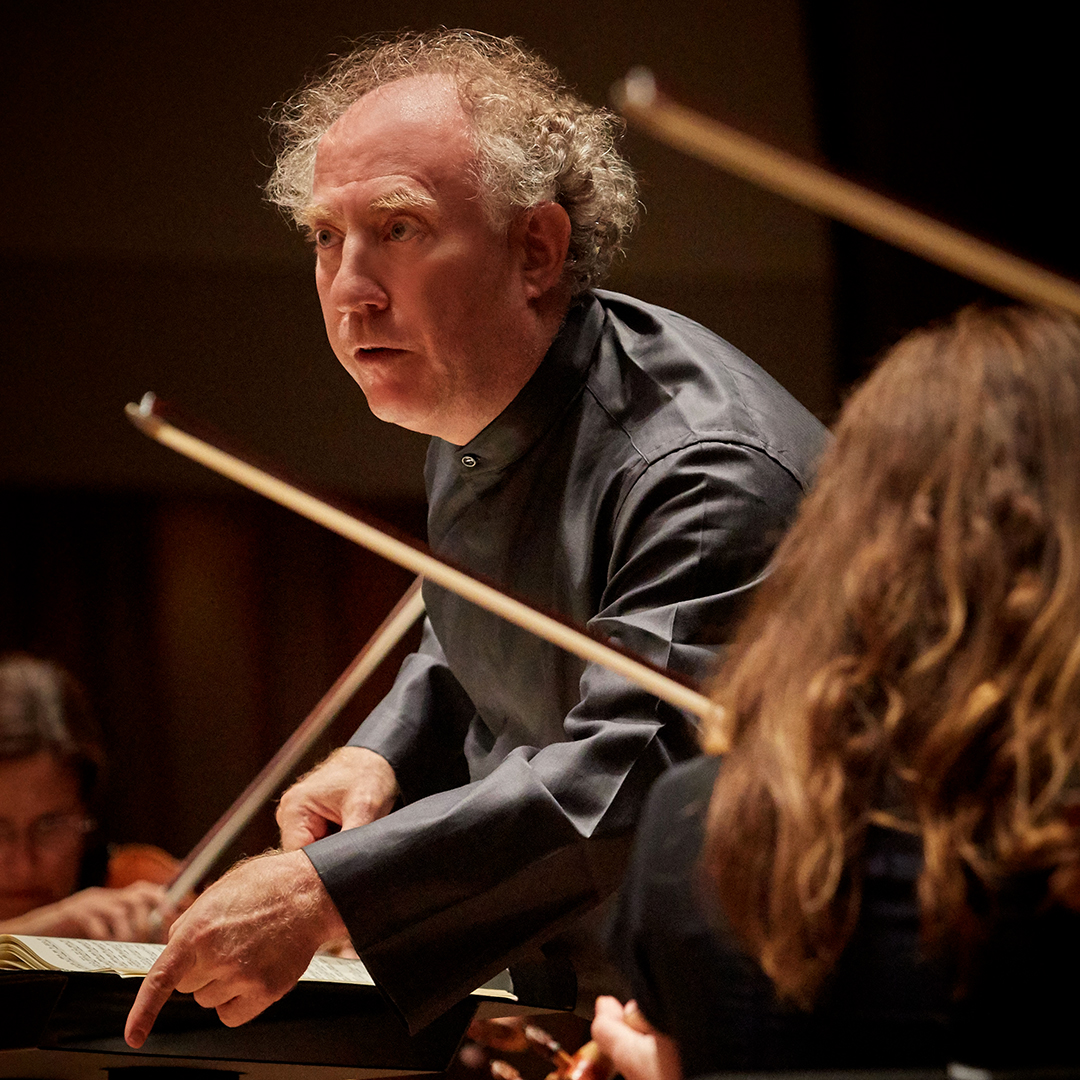
Jeffrey Kahane, Conductor and Piano
Program
Concerto No. 4 for Piano G major, op.58
Jeffrey Kahane, Piano
I. Allergo moderato
II. Adante con moto
III. Rondo (vivace)
Ludwig van Beethoven
(1770-1827)
— Intermission —
Chokfi
Jerod Impichchaachaaha’ Tate
(b. 1968)
Symphony No. 2 in C Major, op.61
I. Sostenuto assai – Allegro ma non troppo
II. Scherzo: Allegro vivace
III. Adagio expressivo
IV. Allegro molto vivace
Robert Schumann
(1810-1856)
Program Notes
Ludwig van Beethoven, Concerto No. 4 for Piano G major, op.58 (1805-1806)
“Ah, Beethoven is no man, he is the devil. He will play me and all of us to death!” These were the words of Joseph Geklinek, Beethoven’s rival pianist in Vienna in the early 1800s. As both a pianist and a composer, Beethoven had achieved widespread fame across the city and was often pitted against other pianists in competitions of skill and improvisation. His Fourth Piano Concerto is a testament to his intimate understanding of the piano, capturing both the virtuosity and expressivity of the instrument. At the time the concerto was written, exciting new developments in piano making were underway: each note on the keyboard now had three strings, and players could use pedals to create different colors based on the number of strings used. Beethoven took full advantage of this new technology, filling the concerto with opportunities for moments of tenderness and beauty.
The concerto was premiered by Beethoven himself in 1808 at the Theater an der Wien in Vienna. He had also given a private premiere of the work one year earlier at the home of Prince Franz Joseph von Lobkowitz, one of Beethoven’s biggest supporters. This would be the last time Beethoven would play as a soloist with orchestra, as his hearing loss had already progressed severely. The Fourth Piano Concerto was not the only monumental work at the 1808 premiere; Beethoven also premiered his Fifth and Sixth Symphonies, the Choral Fantasy, and parts of his Mass in C. One audience member wrote, “There we sat from 6:30 till 10:30 in the most bitter cold, and found by experience that one might easily have too much of a good thing.” Though the concerto was received well, it was only performed once more before Beethoven’s death and was largely forgotten about until Felix Mendelssohn revived the work in 1836, almost three decades later. The work is dedicated to Beethoven’s friend Archduke Rudolph, a well-known patron of the arts and a student of Beethoven himself.
The piece begins with the piano soloist, which is extremely unusual for a concerto of this time period. The opening is simple and improvisatory and is then echoed by the orchestra in the unexpected key of B major. In typical Beethoven style, he develops the melody throughout the movement, taking it apart and putting it back together in surprising ways. The second movement is a dramatic dialogue between the solo piano and orchestra. Beethoven’s biographer likened this conflict to the story of Orpheus using his lyre to soothe the monsters in his journey through the Underworld. From the solemn ending of the second movement, the third movement briskly emerges as a Rondo full of humor and brilliance.
-Maia Ruiz-Law (MM Violin 2026)
Jerod Impichchaachaaha’ Tate, Chokfi (2018)
Chokfi’ (choke-fee) is the Chickasaw word for rabbit, who is an important trickster legend within Southeast American Indian cultures. Inspired by a commission for youth orchestra I decided to create a character sketch that would be both fun and challenging for the kids. Different string and percussion techniques and colors represent the complicated and diabolical personality of this rabbit person. In honor of my Muscogee Creek friends, I have incorporated a popular tribal church hymn as the melodic and musical base.
-Jerod Impichchaachaaha’ Tate
Robert Schumann, Symphony No. 2 in C Major, op.61 (1847)
Robert Schumann, a renowned German composer and critic, had been combating many different health problems; most notable on record were waves of depression and tinnitus. In 1840 he had a newfound marriage with Clara Weick, ushering in a period of empowerment and optimism, and this energy found outlets both in his literary and musical compositions. Two years later Robert wrote to his colleague Felix Mendelsohn, “I lose every melody as soon as I conceive it; my mental ear is overstrained. Everything exhausts me.”
On his doctor’s advice, they moved to Dresden in 1845. There, he recovered sufficiently to resume composing and had a complete outline of the symphony by December with orchestration beginning in February 1846. The ideas had spawned in his head with the record “Trumpets and drums have been sounding in my mind for quite a while now; I have no idea what will come of it.” This could come as a reflection on how disturbed he was at the time, replete with aural hallucinations, lingering from the previous breakdown. This, in turn, was translated into the piece as the trumpets and drums forming a striking motto that opens the symphony and returns near the end.
While the C-major Symphony took less than a week to draft in 1845, its completion was delayed by Schumann’s bouts of failing health and crippling self-confidence, resulting in the first performance in November of the following year. After Mendelssohn led the first performance on November 5th, 1846, Schumann made substantial changes to the orchestration, most notably the addition of the trombones, which is reflected in today’s edition, and was led again by his colleague for the symphony’s second performance two weeks later.
After the first movement with the sandwiching trumpet mottos, we are sent into a scherzo, broken into five parts, which include two trio sections. This energetic section of the symphony provides a strong contrast to moments of lyricism, first the strings, then the winds, led by the oboe. They meld together to lead towards the end of the scherzo towards a recollection of the motto theme.
The adagio espressivo we hear in the third movement is explicitly in C minor and toys with a theme from Bach’s Musical Offering (the first movement of the Trio Sonata) in the opening statement played by the violins. We meet in the middle with a Baroque-like walking-bass section using the same theme.
The finale washes away the C minor palette with its very energetic character. Schumann had actually written in 1849, a few years after completing the symphony, “I wrote the symphony in December 1845, still half sick; it seems to me that one would have to hear this in it. Only in the last movement did I begin to feel like myself again; actually, I became better only after the completion of the whole work. Otherwise though, as I say, it reminds me of a dark time.”
-Jason Bernhard (MM Trombone 2027)
About the Artists
Jeffrey Kahane
Acclaimed pianist Jeffrey Kahane joined the USC Thornton Keyboard Studies Department faculty part-time in 2015 and became a full-time professor in 2016 following a 20-year run as music director of the Los Angeles Chamber Orchestra (LACO), the longest of any music director in the ensemble’s history.
Equally at home at the keyboard or on the podium, Kahane has established an international reputation as a truly versatile artist, recognized by audiences around the world for his mastery of a diverse repertoire ranging from Bach, Mozart and Beethoven to Gershwin, Golijov and John Adams.
Since making his Carnegie Hall debut in 1983, Kahane has given recitals in many of the nation’s major music centers including New York, Chicago, Boston, San Francisco, Los Angeles and Atlanta. He appears as soloist with major orchestras such as the New York Philharmonic, Cleveland Orchestra, Los Angeles Philharmonic, Philadelphia Orchestra and the Toronto and San Francisco symphonies and is also a popular artist at all of the major U.S. summer festivals.
Kahane made his conducting debut at the Oregon Bach Festival in 1988. Since then, he has guest conducted many of the major US orchestras including the New York and Los Angeles Philharmonics, the Philadelphia and Cleveland Orchestras, the Saint Paul Chamber Orchestra and the Chicago, Detroit, St. Louis, Baltimore, Indianapolis and New World symphonies among others. Kahane served more than two decades as music director of the Los Angeles Chamber Orchestra before stepping down in 2017. He concluded his tenure as music director of the Colorado Symphony in June 2010 and for ten seasons was music director of the Santa Rosa Symphony, where he is now conductor laureate. He has received much recognition for his innovative programming and commitment to education and community involvement with all three orchestras and received ASCAP awards for adventurous programming for his work in both Los Angeles and Denver.
Recent engagements include appearances at the Aspen, Caramoor and Blossom festivals; concerto performances with the Toronto, Houston, New World, Colorado and Oregon symphonies among others; play/conducts with the San Francisco, National, Detroit, Vancouver, Indianapolis and New Jersey symphonies and the Rochester Philharmonic, as well as for the third time in four seasons with the New York Philharmonic; and conducting the New England Conservatory Symphony Orchestra in Boston, the Juilliard Orchestra at Lincoln Center and the National Repertory Orchestra in Colorado.
Kahane’s recent European engagements include play/conduct programs with the Camerata Salzburg, Hamburg Symphony and the Real Philharmonic de Galicia in Spain, as well as appearances at the Meck-Pomm Chamber Music Festival in Germany.
Kahane has recorded for the SONY, EMI, Telarc, RCA, Nonesuch, Deutsche Grammophon, Virgin Records, Decca/Argo and Haenssler labels in collaboration with the New World, Cincinnati, Bournemouth and Oregon Bach Festival symphonies, as well as works by Gershwin and Bernstein with Yo-Yo- Ma, the complete works for violin and piano by Schubert with Joseph Swensen, and Bach concertos with LACO and Hilary Hahn.
A native of Los Angeles and a graduate of the San Francisco Conservatory of Music, Kahane’s early piano studies were with Howard Weisel and Jakob Gimpel. First Prize winner at the 1983 Rubinstein Competition and a finalist at the 1981 Van Cliburn Competition, he was also the recipient of a 1983 Avery Fisher Career Grant. An avid linguist who reads widely in a number of ancient and modern languages, Jeffrey Kahane received a master’s degree in classics from the University of Colorado at Boulder in 2011.
Jeffrey Kahane resides in Los Angeles with his wife, Martha, a clinical psychologist in private practice. They have two children – Gabriel, a composer, pianist and singer/songwriter and Annie, a dancer and poet.
Ensemble
ROSTER
Violin I
Dahae Shin, Concertmaster
Juchao Zhao
Marena Miki
Sara Yamada
Diana Dawydchak
Alice Dring
Sarah Yoo
Violin II
Hyojeong Kim, Principal
Yifei Mo
Eric Cheng
Chloe Hong
Ashlee Sung
Dominic Guevara
Viola
Matthew Pakola, Principal
Gloria Choi
Solomon Leonard
Lilien Foldhazi
Kate Brown
Jay Maldonado
Cello
Miles Reed, Principal
Jaemin Lee
Dylan Tyree
Cole Leonard
Taewon Park
Samuel Guevara
Elaina Spiro
Bass
Julien Henry, Principal
Anders Ruiter Feenstra
Abigail Koehler
Micah Sommons
*=Principal on Beethoven
+=Principal on Schumann
Flute
Ellen Cheng*
Seungbeom Oh+
Tony Lin
Oboe
Karen Hernandez*
Nan Zhang
Ricky Arellano+
Chase Klein
Clarinet
Melissa Frisch*+
Jane Pankhurst
Bassoon
Chris Lee*
Henry Mock+
Horn
Steven Phan+
Neven Basener
Xinrae Cardozo*
Trumpet
Richie Francisco*
Ayaka Miura+
Trombone
Sean Cooney*
Joe Chilopolus
Harrison Chiang
Timpani
Cash Langhi
Percussion
Cash Langhi
Xavier Zwick