Concert Programs
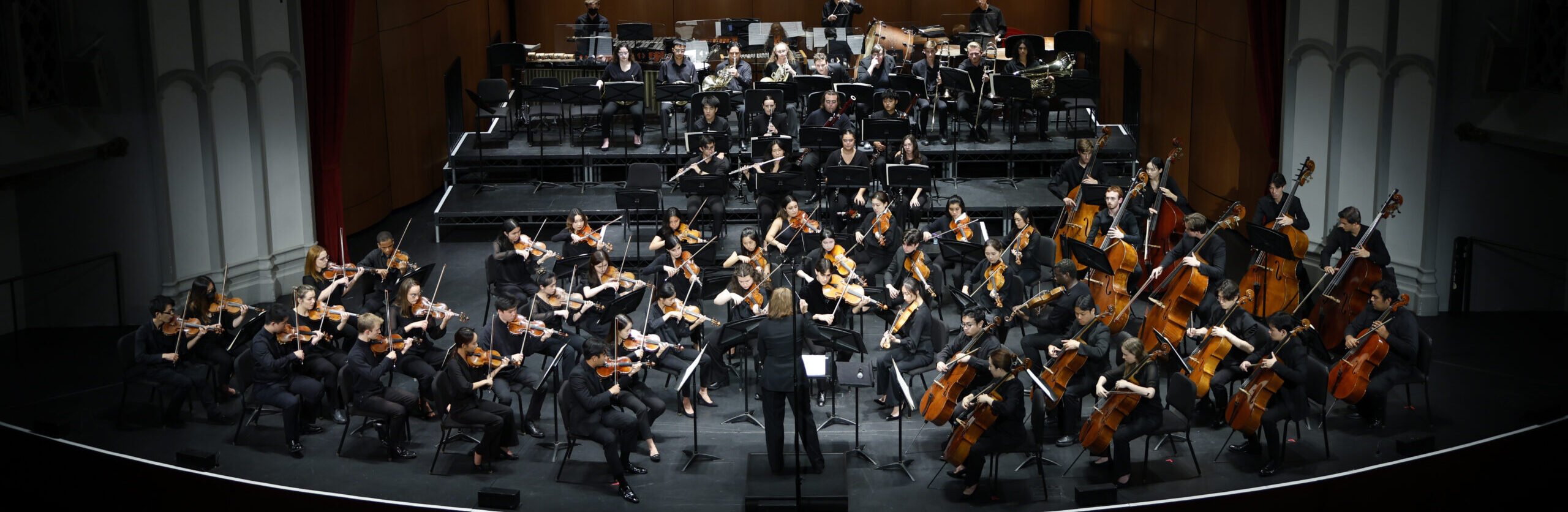
USC Thornton Symphony: Concerto Night
Carl St.Clair, Conductor
Olivia Cho, Cello
Collin Juniper, Saxophone
Soli Cyrus Nallaseth, Piano
Program
Concerto No. 23 for Piano in A Major, K.488
Soli Cyrus Nallaseth, Piano
I. Allegro
II. Adagio
III. Allegro assai
Wolfgang Amadeus Mozart
(1756–1791)
Concerto for Violoncello, op.22
Olivia Cho, Cello
I. Allegro moderato
II. Andante sostenuto
III. Molto allegro e appassionato
Samuel Barber
(1910–1981)
Saxophone Concerto, op.59 “Cyber Bird”
Collin Juniper, Saxophone
Elaine Lin, Piano
David Lee, Percussion
I. Bird in Colors
II. Bird in Grief
III. Bird in the Wind
Takashi Yoshimatsu
(b. 1953)
Program Notes
Wolfgang Amadeus Mozart, Concerto No. 23 for Piano in A Major, K.488 (1786)
This work comes from a time of great success for Mozart. He was in high demand for his compositions, especially his vocal music, however, by this point he proved to be a champion of both the symphony and the concerto as well. This concerto was no exception and comes from a set of three concertos that he prepared for his subscription concerts; the others being K. 482 and K. 491. All three of these concertos were offered to Prince von Fürstenberg, to be played by the court orchestra at Donaueschingen. However, the letter that Mozart wrote to the prince includes a somewhat puzzling remark that K. 488 was a work ‘not even known in Vienna. It is speculated that this was his way of impressing the prince by illustrating that the work had not been published.
One of the most distinct characteristics of this concerto is how prominently it features woodwind sonorities. This is evident even from the opening of the concerto where we hear the juxtaposition of the melody being featured in both the strings and the winds. The first movement is generally characterized by a very light hearted disposition as the first melody passed around between the orchestra and piano. This melody is repeated multiple times throughout the movement though is frequently embellished by virtuosic moments in the piano.
While this concerto does not contain a strong essence of the Sturm und Drang (Storm and Stress) which characterizes some of his other symphonic works around this time, this second movement is the primary look into a more melancholy character. It begins in the key of F# minor and employs an especially memorable 6/8 feeling. The unique time signature in conjunction with the expressive use of chromatic notes gives this movement a bit more drama than the other movements. Notably, he manages to tie this movement to the others by occasionally moving back to the key of A major.
Of course, Mozart finishes the concerto with a triumphant resolve. The final movement, a Presto in 2/4 time, follows a similar aesthetic to the first movement by establishing a strong relationship between the piano soloist and the orchestra. In some way it feels almost as if there is a call and response between the two groups. Notably, the clarinets are featured on their own multiple times throughout this movement. This exemplifies the overall use of woodwind instruments within this concerto.
-Logan Nelson (Double Bass, MM 2026)
Samuel Barber, Concerto for Violoncello, op.22 (1946)
Growing up in West Chester, Pennsylvania, he likely did not predict how renowned and symbolic his compositions would define American music. Samuel Barber, born in 1910, would enroll in the Curtis Institute of Music to study composition, as well as piano, conducting, and singing. After graduation, Barber began his career as a composer, creating definitive works for his time such as Adagio for Strings (1936) and his Essays for Orchestra (1938, 1942, and 1978), laying his mark along compositional giants such as Schoenberg and Stravinsky.
Barber had a distinct compositional style that was difficult to compare with other composers. Never sticking to a style, and seeming to never pick a side in the ongoing battles between tonality and atonality during the early 20th century of composition: “Barber seemed just to write music, and, in so doing, became controversial, someone to be attacked or defended.” Each of his compositions invoked this same sentiment.
Barber’s unique style fully shines in his Cello Concerto (1946). The concerto, throughout its strenuous months of composition, was the result of a collaboration between rising cellist Raya Garbousava and Barber in the hopes that the piece would help propel Garbousava’s career. This close-knit style of working allowed Barber to create a rhythmically complex and challenging cello solo while keeping it feasible and “idiomatic” for Garbousava to perform. He “[wrote] with deep affinity for strings” and gave full control to the soloist to express their virtuosity.
In this work, Barber paints a three movement structure that seeks to contrast minimalistic rhythms with lyrical poems. The first movement features a quick and bouncy beginning, with the orchestra aiding the cello with its flurry of soloistic content, culminating in a grand cello cadenza. Just as the movement ends in a strong finish, the next movement begins with a lyrical ballad by the cello, constantly being echoed by the orchestra as it builds to a beautiful climax. The third movement expands on the first movement, allowing for the virtuosity of the soloist to truly shine on top of the atonality and complexity the orchestra provides, pushing itself to a grand finish.
-Marcos Rivera (Percussion, BM 2028)
Takashi Yoshimatsu, Saxophone Concerto, op.59 “Cyber Bird” (1994)
Composed in 1994 for virtuoso saxophonist Nobuya Sugawa, Takashi Yoshimatu’s Saxophone Concerto remains one of his most devilishly difficult works. Described as a ‘triple concerto’, Yoshimatsu’s concerto is subtitled Cyber Bird, which refers to, in the composer’s words, “an imaginary bird in the realm of electronic cyberspace.” When discussing inspiration for the work, Yoshimatsu also mentions his sister, who sadly died of cancer. Apparently some of her last words before she passed were “I would like to be a bird in my next life.” From here, Yoshimatsu began writing his unique saxophone concerto.
The Music
Set into three movements, each with new titles, the concerto follows a bird (the saxophone) in its journey through colours, grief and the wind. Yoshimatsu was heavily influenced by jazz, so much so that the set up for the concerto is unique. Using a piano, percussion and the soloist at the forefront, the composer also writes an orchestral accompaniment. This set up puts the spotlight on the jazz trio, with the orchestra being a musical accessory.
Movement I – “Bird in Colors”
The fast-paced opening movement asks for flexibility and agility from the soloist. Described as “nervously brilliant”, the opening movement is a cascade of fast melodies intertwined with an amalgamation of unique textures and timbres. The percussion in particular is utilised in this opening movement as an array of percussive instruments fill the atmosphere with shrill, deep and scratchy timbres. The irregular rhythms keep the soloist on their toes, however these are counter-balanced by slow bluesy interludes. These interludes sees the close communication between the jazz trio.
The central, more blues-focused, section offers some much-needed respite from the opening pandemonium. As the soloist takes the music back into the fire of irregular rhythms, loud dynamics and powerful textures, all musicians build up into a cacophony of sound which sees a rip-roaring saxophone lead into the release. The timbral colours of this movement play into the ‘Bird in Colors’ subtitle, with Yoshimatsu really honing in on this feature throughout. A short cadenza leads into the dramatic conclusion of the opening movement.
Movement II – “Bird in Grief”
The quiet and mysterious piano and lower strings opening sets a fragile scene for the saxophone to enter almost 1 minute into the movement. A suspected tribute to his sister, this lyrical movement is set as an elegy. The long melody lines puts pressure on the soloist as the percussion adds decoration. There is a feeling of nostalgia throughout this movement, with the growing dynamics adding to this idea. Yoshimatsu relies on the orchestra much more in this movement, as he uses the strings for their rich and warm textures to support the soloist. The use of other woodwind instruments to intertwine with the soloist also creates a more playful central section.
There is a lot of growth and development for the themes in this movement, which shows the composer’s most traditional style. The piano becomes more integral towards the end of the movement as the dynamic grows and the melody bursts into colour as the orchestra unite. A very moving piece of music, Bird in Grief shows the listener a true spectrum of grief.
Movement III – “Bird in the Wind”
The shortest of the three movements, the ecstatic finale starts at a moderate speed before bursting into action. As with the opening movement, the saxophone part requires some keen dexterity from the soloist as the part flies up and down different scales. Yoshimatsu is seen utilising the orchestra a lot more too, with the trumpets creating a big band feel part-way through. The mix of irregular rhythms and then more lyrical sections creates dramatic changes that add a thrill to the music.
After a short cool-down section, the saxophone rushes off once more with the aid of the percussion. As the bird begins to take flight once more, the orchestra becomes even more involved with take-off. Intricate unison sections lead into a bombastic saxophone interlude that fills the texture. This chaotic cacophony of sound carries on until the orchestra take over to lead into the loud and dramatic end to this one-of-a-kind concerto.
-Alex Burns, www.classicalexburns.com
About the Artists
Carl St.Clair
Carl St.Clair is internationally recognized for his distinguished career as a professional conductor and master teacher. He has had a continuing relationship with the USC Thornton School of Music for over 25 years as conductor of the USC Thornton orchestras and a faculty lecturer in conducting. In 2012, he took on an expanded role as artistic leader and principal conductor of the USC Thornton orchestras.
The 2022-2023 season marks his thirty-third year as music director of the Pacific Symphony. He is one of the longest-tenured conductors of the major American orchestras. St.Clair’s lengthy history solidifies the strong relationship he has forged with the musicians and the community. His continuing role also lends stability to the organization and continuity to his vision for the symphony’s future. Few orchestras can claim such rapid artistic development as the Pacific Symphony—the largest-budgeted orchestra formed in the United States in the last 50 years—due in large part to St.Clair’s leadership.
During his tenure, St.Clair has become widely recognized for his musically distinguished performances, his commitment to building outstanding educational programs and his innovative approaches to programming. In April 2018, St.Clair led the Pacific Symphony in its sold-out Carnegie Hall debut as the finale to the Carnegie’s yearlong celebration of pre-eminent composer Philip Glass’s eightieth birthday, ending in a standing ovation and with The New York Times calling the symphony “a major ensemble!” He led the Pacific Symphony on its first tour to China in May 2018, the orchestra’s first international tour since touring Europe in 2006. The orchestra made its national PBS debut in June 2018 on Great Performances with Peter Boyer’s “Ellis Island: The Dream of America,” conducted by St.Clair. Among St.Clair’s many creative endeavors are the highly acclaimed American Composers Festival, which began in 2000; and the opera initiative, “Symphonic Voices,” which continues for the ninth season in 2019-20 with Verdi’s Othello, following the concert-opera productions of Madame Butterfly, The Magic Flute, Aida, Turandot, Carmen, La Traviata, Tosca and La Bohème in previous seasons.
St.Clair’s commitment to the development and performance of new works by composers is evident in the wealth of commissions and recordings by the Pacific Symphony. The 2016-17 season featured commissions by pianist/composer Conrad Tao and composer-in-residence Narong Prangcharoen, a follow-up to the recent slate of recordings of works commissioned and performed by the symphony in recent years. These include William Bolcom’s Songs of Lorca and Prometheus (2015-16), Elliot Goldenthal’s Symphony in G-sharp Minor (2014-15), Richard Danielpour’s Toward a Season of Peace (2013-14), Philip Glass’ The Passion of Ramakrishna (2012-13) and Michael Daugherty’s Mount Rushmore and The Gospel According to Sister Aimee (2012-13). St.Clair has led the orchestra in other critically acclaimed albums including two piano concertos of Lukas Foss, Danielpour’s An American Requiem and Goldenthal’s Fire Water Paper: A Vietnam Oratoriowith cellist Yo-Yo Ma. Other commissioned composers include James Newton Howard, Zhou Long, Tobias Picker, Frank Ticheli, Chen Yi, Curt Cacioppo, Stephen Scott, Jim Self (Pacific Symphony’s principal tubist) and Christopher Theofanidis.
In 2006 and 2007, Carl St.Clair led the orchestra’s historic move into its home in the Renée and Henry Segerstrom Concert Hall at Segerstrom Center for the Arts. The move came on the heels of the landmark 2005-2006 season that included St.Clair leading the symphony on its first European tour—nine cities in three countries playing before capacity houses and receiving extraordinary responses and reviews.
From 2008-2010, St.Clair was general music director for the Komische Oper in Berlin. He also served as general music director and chief conductor of the German National Theater and Staatskapelle (GNTS) in Weimar, Germany, where he led Wagner’s Ring Cycle to critical acclaim. He was the first non-European to hold his position at the GNTS; the role also gave him the distinction of simultaneously leading one of the newest orchestras in America and one of the oldest in Europe.
In 2014, Carl St.Clair became the music director of the National Symphony Orchestra in Costa Rica. His international career also has him conducting abroad several months a year, and he has appeared with orchestras throughout the world. He was the principal guest conductor of the Radio Sinfonieorchester Stuttgart from 1998 to 2004, where he completed a three-year recording project of the Villa–Lobos symphonies. He has also appeared with orchestras in Israel, Hong Kong, Japan, Australia, New Zealand, South America, China, Thailand and Malaysia and in summer festivals worldwide. In North America, St.Clair has led the Boston Symphony Orchestra (where he served as assistant conductor for several years), New York Philharmonic, Philadelphia Orchestra, Los Angeles Philharmonic and the San Francisco, Seattle, Detroit, Atlanta, Houston, Indianapolis, Montreal, Toronto and Vancouver symphonies, among many.
Carl St.Clair is a strong advocate of music education for all ages and is internationally recognized for his distinguished career as a master teacher. He has been essential to the creation and implementation of the Pacific Symphony’s education and community engagement programs including Pacific Symphony Youth Ensembles, Heartstrings, Sunday Matinées, OC Can You Play With Us?, arts-X-press and Class Act. In addition to his professional conducting career, St.Clair has worked with most major music schools across the country. In 2018, Chapman University President Danielle Struppa appointed St.Clair as a Presidential Fellow, working closely with the students of the College of the Performing Arts at Chapman University. St.Clair has been named “Distinguished Alumni in Residence” at the University of Texas Butler School of Music beginning 2019. And, for over 25 years, he has had a continuing relationship with the USC Thornton School of Music where he is artistic leader and principal conductor of the orchestral program.
Soli Cyrus Nallaseth
Born in New York City, raised in Mumbai, educated in London, and currently residing in Los Angeles, Soli Cyrus Nallaseth’s youth has already seen him exposed to a multitude of vastly different and enriching cultures, with music being the centerpiece that holds everything together and takes him everywhere.
Prizewinner at the 23rd International Chopin Piano Competition in Mazovia, semi-finalist at the 5th Manchester International Concerto Competition, Winner of the University of Southern California Thornton School of Music Concerto Competition, two-time winner of the MusiQuest All India Piano Competition and with a catalogue of further awards and achievements to his name, he has performed a several piano concertos on numerous occasions with the Symphony Orchestra of India – with whom he has developed a very special relationship – across the country.
In addition to having been selected to attend the Chautauqua Piano Program for the Summer 2025 Season, the Aspen Music Festival and School for the Summer 2024 season and to attend the Musica Mundi Summer Festival on a full scholarship in July-August 2015 and 2016, Soli has performed in several countries around the world, including at the prestigious Wigmore Hall amongst various other venues in the U.K., U.S.A, India, Belgium, the Netherlands, Italy, Germany, and Poland. He has also performed and scored for film, composing music for Sooni Taraporewala’s Netflix Original film “Yeh Ballet” in 2019.
He has taken masterclasses and worked extensively with some of the leading concert pianists and teachers in the world, including Daniel Barenboim, Stephen Kovacevich, Alexander Kobrin, Maria Joao Pires, Steven Hough, Steven Osborne, Peter Frankl, Eugene Indjic and Leslie Howard, as well as with outstanding musicians in other instrumental departments; Ivry Gitlis and Marat Bisengaliev, among several esteemed others.
A former student of Dr. Murray McLachlan at Chetham’s School of Music, Soli graduated from the Royal Academy of Music with First Class Bachelor of Music and Master of Arts Degree under the guidance of his former teachers, Professor Colin Stone, and Professor Sulamita Aronovsky. He is currently pursuing his Doctor of Musical Arts in Piano Performance at the University of Southern California Thornton School of Music under the guidance of Professor Kevin Fitz-Gerald.
Olivia Yelim Cho
Equally committed to performance, pedagogy, and outreach, Canadian-Korean cellist Olivia Yelim Cho is devoted to pursuing multifaceted artistry that builds community. She is currently pursuing her Doctorate of Musical Arts at the University of Southern California with Ralph Kirshbaum, where she serves as a Teaching Assistant and most recently won the Thornton Strings Concerto Competition (2024) and Thornton Strings Bach Solo Competition (2025). Concurrently, she holds a position at the Colburn School’s Center for Innovation and Community Impact (CICI) which champions the institution’s community engagement and student career development initiatives.
Hailed as one of CBC Music’s “30 hot classical musicians under 30,” Olivia debuted with the National Arts Centre Orchestra in 2020 with conductor Alexander Shelley, receiving praise for her “ravishing tone and organically felt phrasing… sincerity, wonderful taste, and a mature aplomb beyond her years” (ARTSFILE). She is a top prizewinner of the Shean Strings Competition (2023) and two-time winner of the Award of Excellence at the National Youth Orchestra of Canada (2021, 2022). Olivia has performed with musicians such as Shunske Sato, Jennifer Grim, Tessa Lark, and Blake Pouliot, and attended on full scholarship festivals such as the Heifetz International Music Institute Chamber Music Seminar, New York String Orchestra Seminar, Orford Music Academy, and Aspen Music Festival and School.
With a keen interest in expanding arts accessibility through interdisciplinary collaboration and thoughtful pedagogy, Olivia has engaged in activities such as presenting for TEDxYouth on the value of music and performing for the Colburn School’s Musical Encounter Interactive, which brought an educational show blending music and drama to over 1,500 elementary school students. In 2020, Olivia worked with her sister to organize a hybrid socially-distanced and online benefit concert titled con moto to raise funds for local groups supporting the Black & Indigenous Lives Matter movements. She has previously enjoyed leading cello workshops at the Vancouver Academy of Music, coaching cellists in the Colburn Baroque Ensemble, and teaching through Colburn’s Jumpstart Scholarship Program, a fully funded after-school music program for students at the intersection of need and merit.
Olivia began her cello studies with Joseph Elworthy at the Vancouver Academy of Music. She completed her B.M. and German Studies Minor at the University of Michigan with Richard Aaron and M.M. at the Colburn Conservatory with Clive Greensmith. She currently plays on an 1825 Gosselin cello on loan to her through a foundation. Apart from music, Olivia loves to draw and discover new taco and dumpling spots.
Collin Juniper
Classical saxophonist Collin Juniper weaves a tapestry of passion and community in the belief that music has the power to transcend boundaries, unite hearts, and foster a profound sense of belonging.
Hailing from Azusa, California, Collin is currently in his fourth year of training at the esteemed Thornton School of Music at the University of Southern California. Studying classical saxophone under the tutelage of Dr. Jessica Maxfield, Dr. Kenneth Foerch, and Professor Sal Lozano, and jazz saxophone under the tutelage of Dr. Ennis Harris, he is avidly expanding his talents to embrace composition, piano, jazz performance, and world music, making him a versatile and well-rounded musician.
At USC, Collin co-founded the world-premiering ORCA Duo, is a member of the LOCA Quartet, served as principal saxophonist of the prestigious Thornton Wind Ensemble, and collaborated across disciplines with musicians, dancers, and actors from across the university. Most recently, he was named winner of the 2025 USC Winds and Percussion Concerto Competition.
Outside of USC, Collin has worked professionally as both a recording and performing artist. He has recorded in professional studios for multiple bands and performed with a wide variety of ensembles, including the funk and R&B group The Broken Windows, the R&B band Coveted Future, and traditional jazz ensembles such as the Society for the Preservation of Dixieland Jazz.
Whether in classical, jazz, or experimental settings, Collin strives to bring emotional depth, cultural awareness, and artistic integrity to every performance. His current project, Drone Music Across the World, reflects his passion for both tradition and innovation in sound.
Ensemble
Violin I
Juchao Zhao, Concertmaster
Maya Masaoka
Hyojeong Kim
Maya Irizarry Lambright
Ariana O’Connell
Agatha Blevin
Eric Cheng
Ashlee Sung
Sarah Yoo
Alice Dring
Violin II
Ayman Amerin, Principal
Yifei Mo
Dahae Shin
Andrew Choi
Chloe Hong
Nathan Nguyen
Isaiah Iny-Woods
Junha Park
Viola
Cecile McNeill, Principal
John Czekanski
Matthew Pakola
Jay Maldonado
Solomon Leonard
Poppy Yu
Kate Brown
Lilien Foldhazi
Cello
Madelynn Bolin, Principal
Isabelle Fromme
Taewon Park
Cole Leonard
Cheyoon Lee
Siena Rosborough
Yongjoon Choe
Bass
Anders Ruiter-Feenstra, Principal
Enzo Nigro
Lillian Young
Micah Sommons
Julian Henry
*=Principal on Mozart
+=Principal on Barber
^=Principal on Yoshimatsu
Flute
Tony Lin+
Luke Blancas^
Dennis Papazyan
Kiana Kawahara*
Oboe
Karen Hernandez+^
Connor Feyen
Jingming Zhao
English Horn
Connor Feyen
Clarinet
Jane Pankhurst+
Alex Varvne^
Andrei Bancos*
Bass Clarinet
Alex Varvne
Bassoon
Ethan Ault+
Callahan Lieungh*
Horn
Xinrae Cardozo+
Steven Phan
Alan Schlessinger^
Neven Basener
Joe Oberholzer
Lauren Goff*
Trumpet
EJ Miranda+
Richie Francisco^
Hugo Tomas
Trombone
Avery Robinson^
Joe Chilopolus
Harrison Chiang
Timpani
Marcos Salgado+
Percussion
Cash Langhi+^
Marcos Rivera